
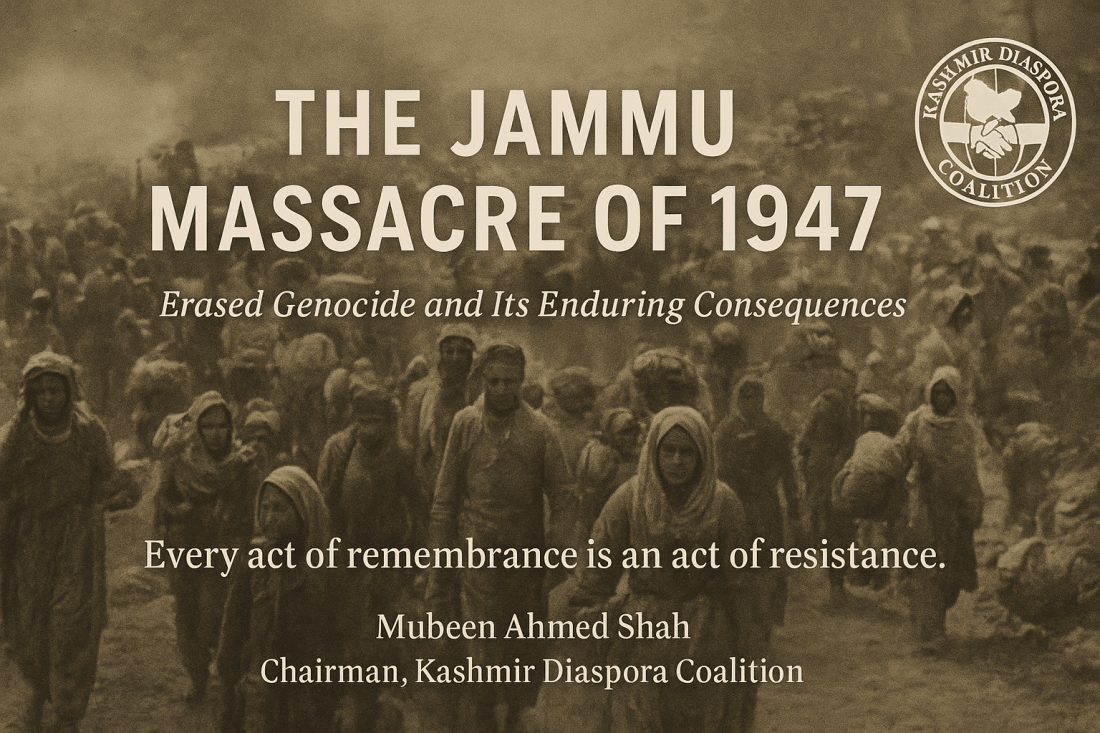
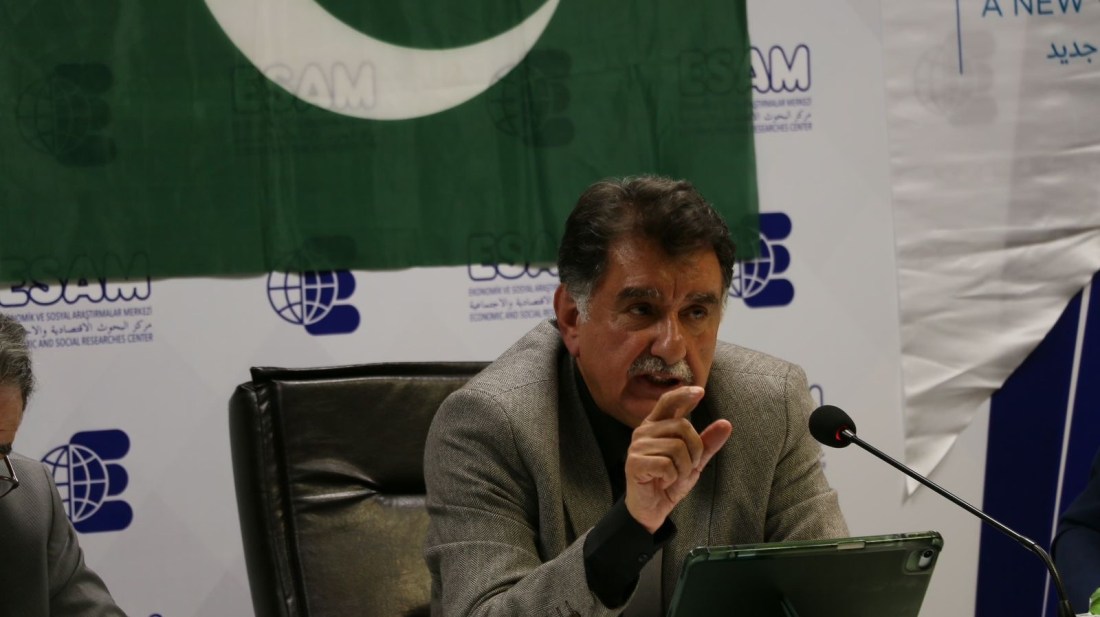
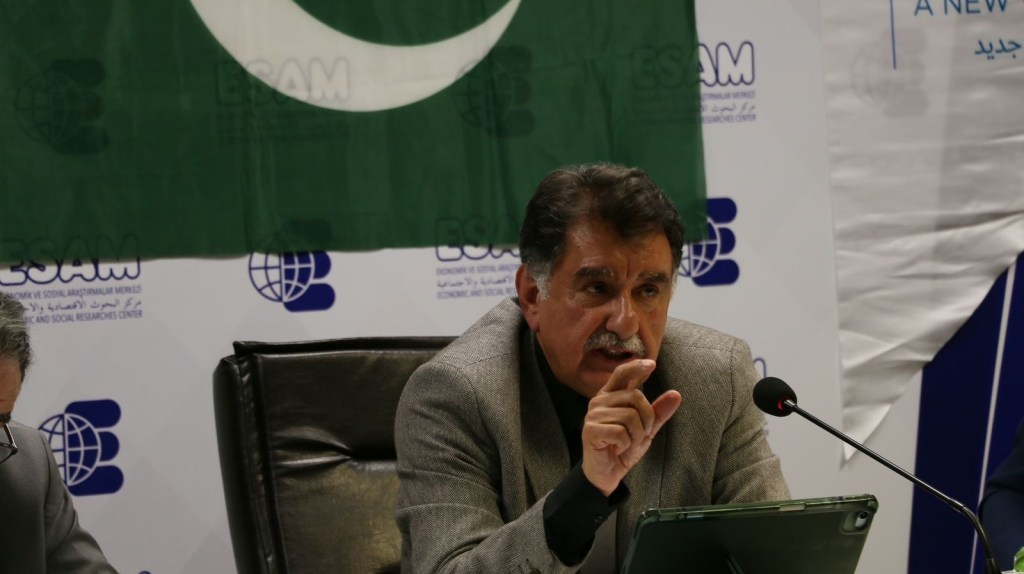
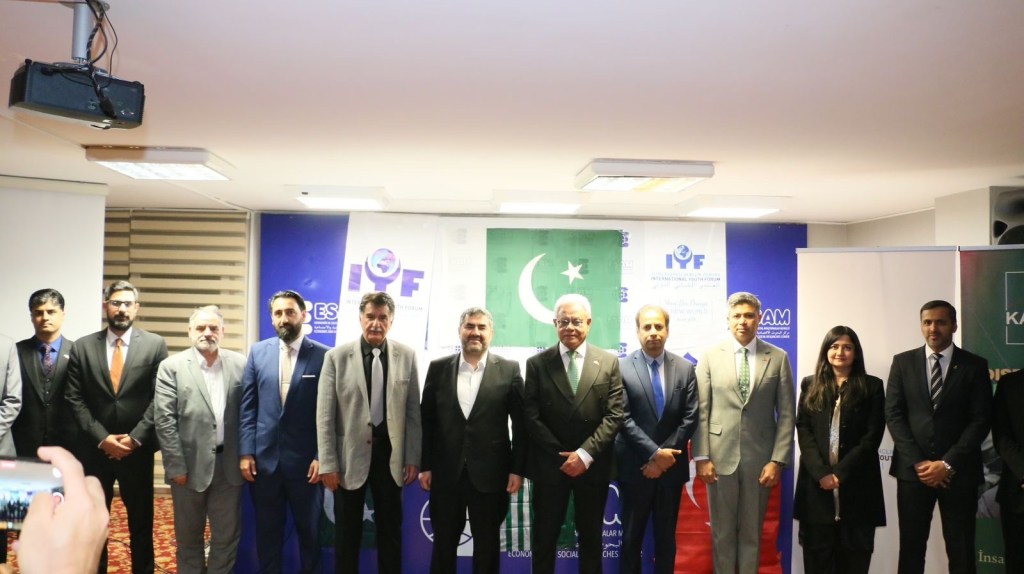
I had the opportunity to speak in a webinar organised by Centre for International Strategic Studies Azad Kashmir ( CISS AJK ) to commemorate the tragic events of November 6, 1947 remembered as the #JammuGenocide .
Herewith below is the speech I made .
Distinguished scholars, respected colleagues, ladies and gentlemen,
I am deeply honored to speak before this esteemed gathering at a time when the world is once again debating the boundaries of justice, memory, and impunity.
Today, I wish to recall an event that remains largely absent from international discourse yet it lies at the heart of the unresolved question of Jammu and Kashmir.
That event is the Jammu Massacre of November 6, 1947 one of South Asia’s earliest and most silenced genocides .
A Silenced Genocide
Seventy-eight years ago, in the autumn of 1947, the plains and hills of Jammu became the site of a planned and systematic extermination of Muslims.
In just a few weeks, between 200,000 and 500,000 people were killed.
More than 700,000 were expelled from their homes and forced across the border into newly created Pakistan.
Entire villages vanished. Families were told they were being taken to safety only to be ambushed and slaughtered on the way to Sialkot.
The perpetrators were not mobs acting in chaos; they were Dogra state forces and Rashtriya Swayamsevak Sangh (RSS) militias operating with coordination and impunity.
The late Ved Bhasin, one of Jammu’s most respected journalists and an eyewitness, wrote:
“What happened in Jammu in 1947 was a systematic and planned massacre of Muslims. It changed the demography of the region forever and yet, it remains
erased from India’s official history.”
His words capture both the enormity of the crime and the scale of its erasure.
⸻
The Purpose Behind the Violence
The killings were not random. They had a political and demographic purpose.
Before 1947, Muslims made up more than 60 percent of Jammu’s population.
After the massacre and forced migration, that number dropped to nearly 30 percent transformation so dramatic it could only have been deliberate.
—
The goal was to permanently alter the demography of Jammu and ensure that any future political arrangement for Jammu and Kashmir would be tilted against its Muslim population.
British records from the time confirm the involvement of the Dogra administration in organising “evacuations” that became instruments of extermination.
Ian Stephens, then editor of The Statesman, described Jammu as “an emptied land.”
It was, in many ways, the first act of structural genocide in the modern history of Kashmir.
Erasure as a Continuation of Violence
What followed was a silence almost as devastating as the massacre itself.
There was no investigation. No memorial. No recognition.
Refugees who crossed into Pakistan and Azad Jammu & Kashmir were stripped of property and citizenship.
Those who remained in Jammu saw their lands confiscated, mosques destroyed or repurposed, and their history erased from the public record.
To this day, no official record, textbook, or state commemoration acknowledges what happened in Jammu in 1947.
This deliberate amnesia is not a historical oversight it is a political decision.
It extends the violence by denying the victims their humanity and the survivors their truth.
Unfortunately our leaders like Sheikh abdullah was responsible for this erasure . We Kashmiris within the valley did not know about the enormity of this for lot of time and I remember that in 2015 Zafar choudhary a journalist published his book
“Kashmir Conflict and Muslims of Jammu, (2015)”” wherein this genocide was described in a detailed manner and I am witness that as a part of civil society organisation we publicly acknowledge as well as asked from forgiveness from the jammu Muslims of not projecting this genocide in our discourses on kashmir .
Today is a good occasion to take that forward .
The Continuum: From 1947 to the Present
The Jammu Massacre did not end in 1947.
Its logic – the logic of demographic domination now re-emerged in the twenty-first century.
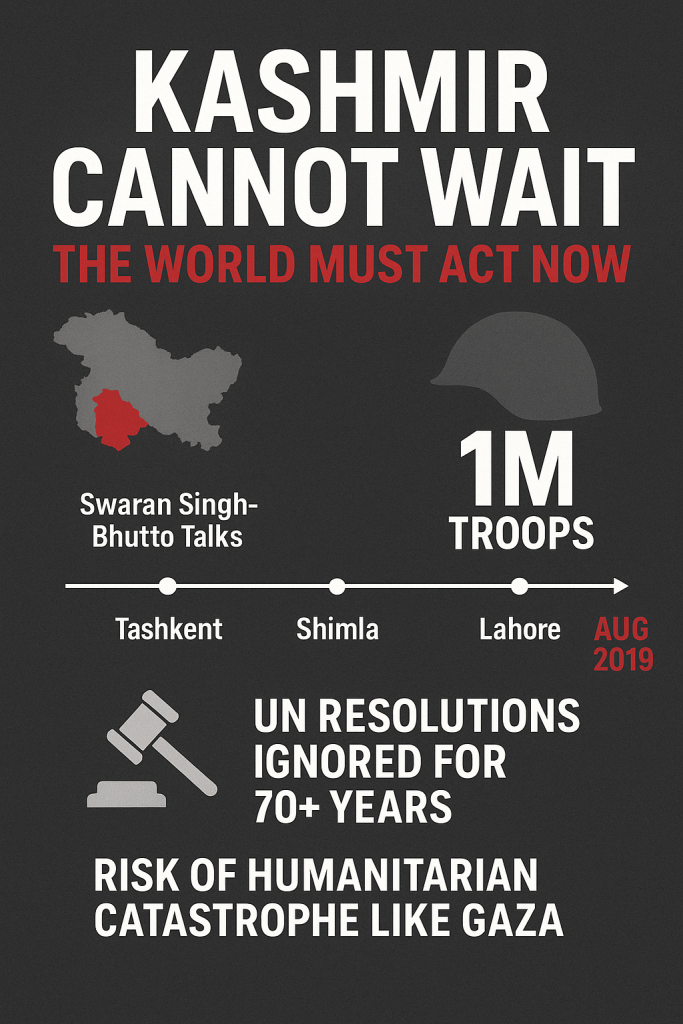
When India revoked Jammu and Kashmir’s semi-autonomous status on August 5, 2019, and imposed new domicile and land laws allowing non-residents to settle in the region, it marked the institutionalization of the same project that began in 1947.
The policies introduced since then —land transfers, military colonies, and politically driven redistricting —replicate the demographic engineering first tested in Jammu.
The difference is that what was done with rifles in 1947 is now being done with regulations, bureaucracy, and legal instruments.
This is why we describe the Jammu Massacre not as a single event but as a continuum of structural violence one that connects the past to the present, and erasure to occupation.
Why the World Must Acknowledge Jammu 1947
Despite its scale, the Jammu Massacre has been excluded from global genocide discourse.
Under international law, it clearly meets the threshold of a crime against humanity involving mass killings, forced displacement, and persecution on religious grounds.
Acknowledging this history is not about reopening wounds. It is about naming a wound that never healed.The world cannot uphold the principles of genocide prevention while ignoring one of its earliest and most complete examples in South Asia.
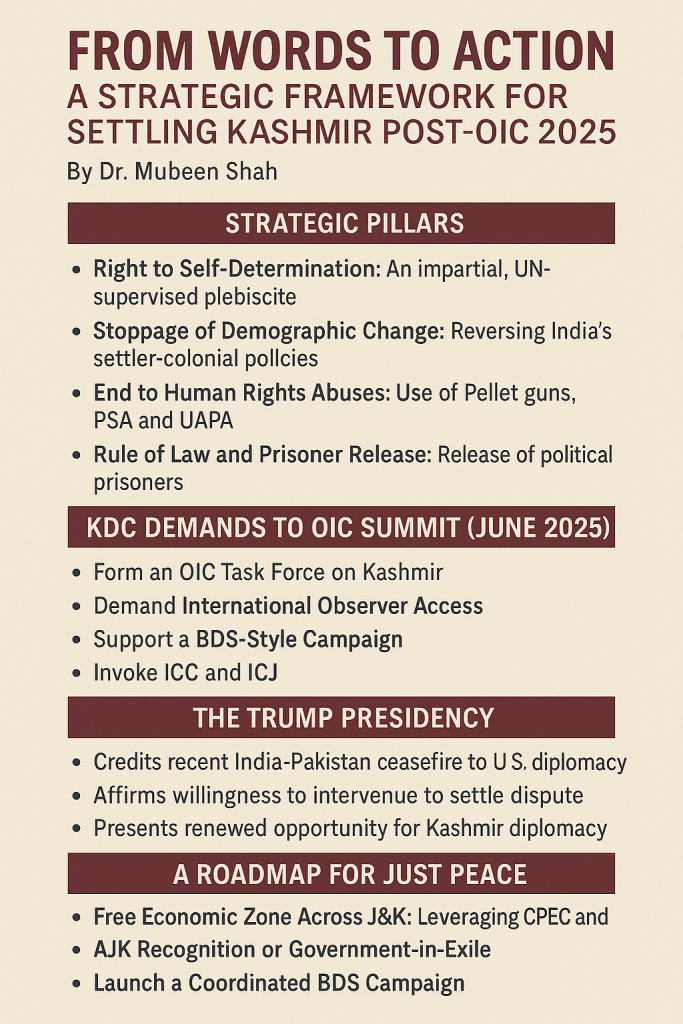
As the Kashmir Diaspora Coalition, we call upon international human rights institutions, scholars, and governments to recognize November 6 as the Jammu Massacre Memorial Day- a day of remembrance and reflection on the cost of silence.
⸻
Policy Imperatives
Recognition must be accompanied by action.
A policy paper needs to be formulated , “The Jammu Massacre of 1947: Erased Genocide and Its Enduring Consequences,” which should outline several urgent steps:
1. International Recognition:
Include the Jammu Massacre within UN and global genocide prevention frameworks.
2. Truth and Accountability:
Establish an Independent International Historical Commission on Jammu 1947 to document the massacre through archival and oral evidence.
3. Restitution and Memorialization:
Recognize the rights of displaced families, protect remaining Muslim heritage sites in Jammu, and ensure institutional remembrance through education.
4. Preventing Contemporary Demographic Engineering:
Closely monitor India’s post-2019 domicile and land policies to ensure they comply with international law and human rights norms.
5. Declassification of Archives:
Release British, Indian, and Pakistani archival material that can illuminate the events of 1947 and help build an authentic historical record.
Remembrance as Justice
Ladies and gentlemen,
the denial of justice begins with the denial of truth.
For Kashmiris, remembering the Jammu Massacre is not just about history; it is about survival.
Every act of remembrance is an act of resistance against erasure.
And every act of recognition by the world community is a step toward preventing recurrence not just in Kashmir, but anywhere that power seeks to rewrite the truth of the oppressed.
The Jammu Massacre was designed to erase a people from their land.
To remember it is to refuse that erasure.
To demand justice for it is to insist on the universality of human rights.
Conclusion
As policymakers, scholars, and advocates, we must ensure that the victims of Jammu 1947 are not confined to the margins of history.
Their story is not a footnote to Partition it is a defining chapter in the struggle for dignity and self-determination in Kashmir.Seventy-eight years later, the question before us is simple yet profound:

Will we allow silence to remain the last word on Jammu 1947?
Or will we, at last, give the victims of that genocide the justice of acknowledgment and the power of memory?
Thank you.
⸻






 Mubeen"s Blog